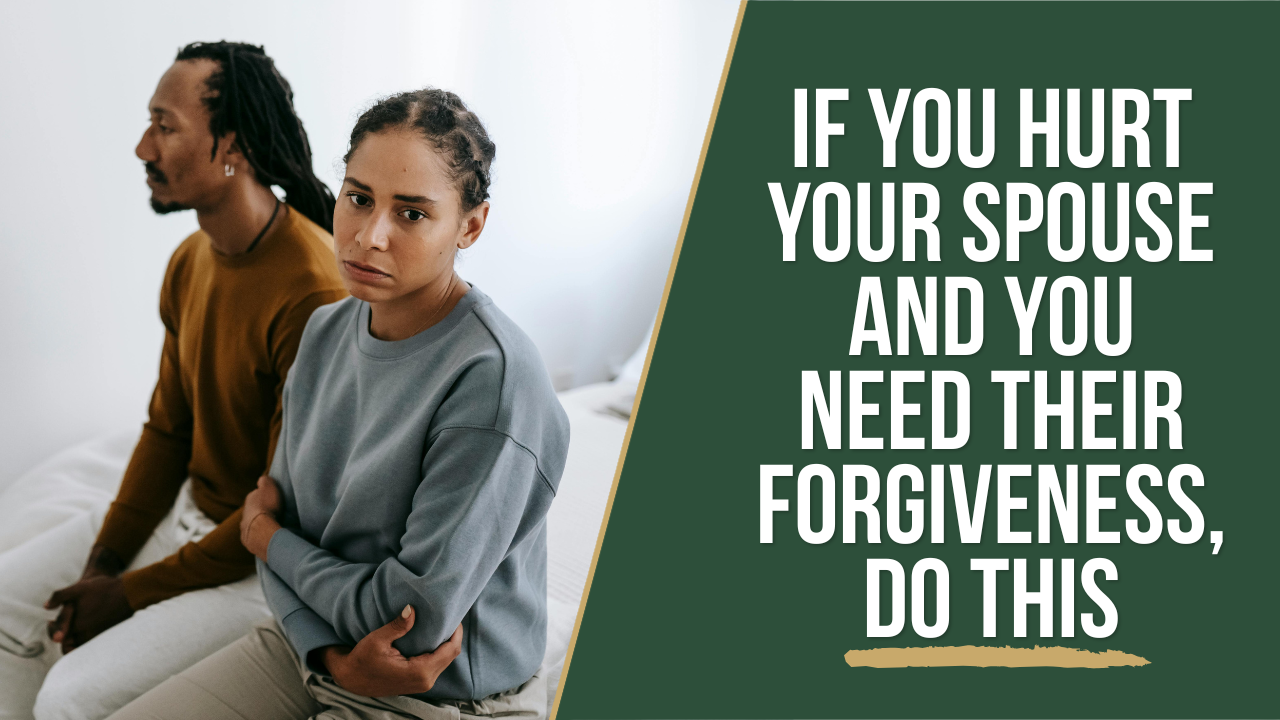
When you’ve deeply hurt your spouse, one of the hardest places to be is wanting forgiveness but being powerless to receive it.
Maybe you’ve confessed. Maybe you’ve apologized. Maybe you’ve changed. But your husband or wife still seems distant, guarded, or unwilling to trust you again. What else can you do?
The hard truth is this: Forgiveness is a choice. You can’t make them forgive you. But the Bible does show us how to pursue reconciliation in a way that honors God and gives healing the best chance to grow.
So if you are in need of your spouse’s forgiveness, here are 5 biblical truths to remember.
1. Ask for Forgiveness, But Don’t Demand It
Matthew 6:14-15 says, “For if you forgive others their trespasses, your heavenly Father will also forgive you . . .” That means God commands your spouse to forgive—but that command is between them and God, not between them and you.
This is important to accept because many spouses make matters worse by saying things like, “I said I’m sorry. You’re supposed to forgive me!” But that kind of pressure makes it even harder for them to forgive you because they will feel forced, and forgiveness is a choice. When you try to take away their choice, you are taking away your opportunity to be shown grace.
Real forgiveness often takes time, especially in marriage where trust has been damaged. If you truly want your spouse to forgive you, ask sincerely, but then give them the time and space to work through their pain.
Pushing too hard will make them feel like you are just trying to heal yourself rather than wanting them to heal too.
2. Show Real Repentance, Not Just Regret
Patterns matter more than anything.
A spouse who has been hurt is usually asking one question: Are you really changing, or are you just sorry you got caught? That’s why ongoing repentance is so important for bringing healing and rebuilding trust. Ephesians 4:22-24 says:
You were taught, with regard to your former way of life, to put off your old self, which is being corrupted by its deceitful desires; to be made new in the attitude of your minds; and to put on the new self, created to be like God in true righteousness and holiness.”
Biblical repentance is not just feeling bad. It’s turning away from the sin and becoming different (Ephesians 4:28). If your anger wounded your spouse, repentance means learning self-control. If dishonesty hurt your marriage, repentance means radical honesty. If a porn-addiction shattered trust, repentance means complete transparency.
Your spouse may not believe your words right away. You have to accept that and show them that you understand why the trust has been broken. Trust is rebuilt through consistency.
In marriage, changed behavior is one of the loudest apologies and helps your spouse forgive you because they will see you are truly repentant.
3. Receive Their Pain Without Defending Yourself
When your spouse is hurt, they will often need to express that hurt. And if you’re the one who caused it, you have to be mature enough to hear how you made them feel. Luke 17:3 says, “If your brother sins, rebuke him . . .”
In marriage, that means your spouse has a biblical right to confront your sin. This doesn’t mean they should become sinful in their anger. It doesn’t mean they have the right to sin against you because you sinned against them. But it does mean you need to let them speak honestly and express their hurt feelings.
This is a part of the process of making things right. For someone to let you back in, they need to verbally and emotionally acknowledge that you hurt them. If you don’t let them express how you wronged them, you are slowing down their ability to move on. Before they can fully forgive you, they need time to accept how you have fully hurt them.
One of the worst things you can do after hurting your spouse is spend all your energy explaining yourself. Defensiveness often sounds like:
- “That’s not what I meant.”
- “You’re overreacting.”
- “You’ve hurt me too.”
But healing begins when you stop protecting yourself and start listening. Own it. Receive the rebuke. Sit in it. Sometimes the most healing words in marriage are: “You’re right. I hurt you. I understand why you feel that way. I’m wrong.”
That humility opens doors that pride keeps shut.
4. Allow Them Time to Be Angry
Not all anger is sinful.
Ephesians 4:26 says, “Be angry and do not sin…” If your spouse is angry because of your sin, that can actually be a righteous response. The worst sign is when they don’t feel anything at all. If they’re angry with you, that’s at least a sign there’s still life in the relationship. When someone gives up on you, they won’t feel anger anymore. They won’t feel anything. That’s rock bottom for a marriage.
In marriage, we often want instant restoration because the tension feels unbearable. But your spouse may need time to process what happened. The anger they’re feeling is a part of the healing process.
Part of loving your spouse after hurting them is allowing them the time to go through the emotional process they need. We all heal and process differently. Give them what they need, not what you want.
5. Pray for Their Heart—and Yours
Ultimately, only God can heal a marriage. Only God can soften hearts, restore trust, and rebuild what sin has broken. Romans 8:26-27 reminds us:
Likewise the Spirit helps us in our weakness. For we do not know what to pray for as we ought, but the Spirit himself intercedes for us with groanings too deep for words. And he who searches hearts knows what is the mind of the Spirit, because the Spirit intercedes for the saints according to the will of God.”
If you’ve wounded your spouse, don’t underestimate what God can do through humble prayer and consistent obedience.
So how do you get your spouse to forgive you?
You can’t force it. But you can make it easier for them to trust the process by walking in humility.
And remember: in marriage, forgiveness is often not a one-time event—it can be a journey. But when two people keep submitting to Christ, even deep wounds can become testimonies of God’s restoring power.
Click here to subscribe to the new AGW for Marriage YouTube Channel!